

Window Efficiency Explained: WhatMichigan Homeowners Need to Know
In Michigan, we experience icy winters, humid summers, and everything in between.
Energy-efficient windows play a major role in your comfort and energy bills. If your windows
aren’t energy efficient, you’re likely paying more for heating and cooling than you should be.
Why Window Efficiency Matters in Michigan
Michigan homes need to withstand harsh winters with freezing temperatures and heavy
snowfall, while remaining cool and comfortable through hot, humid summers. That makes
choosing the right windows a critical part of your home’s performance and energy strategy.
Efficient windows can help you lower your heating and cooling bills, eliminate drafts and hot
spots, reduce condensation and moisture buildup, and increase the comfort and indoor air
quality of your home.
Glass: The Biggest Factor in Window Efficiency
While frame materials and installation are important, glass is the true powerhouse behind
window performance. Here’s why:
● Double or Triple Panes: More panes = better insulation. Triple-pane windows are ideal
for cold climates like Michigan.
● Low-E (Low-Emissivity) Coatings: This invisible layer reflects heat inside during winter
and blocks it out during summer.
● Gas Fills (Argon or Krypton): These inert gases between panes help insulate far better
than air, preventing heat transfer.
● Warm Edge Spacers: These reduce condensation and help maintain a stable interior
temperature.
Choosing the right glass package makes a big difference in keeping your home warm in the winter and cool in the summer.
Window Efficiency Ratings
When shopping for new windows, you’ll often see efficiency ratings listed on labels. Here’s what
they mean:
● U-Factor: Indicates how effectively a window prevents heat transfer, keeping warm air
inside during winter and cool air during summer. The lower the U-Factor, the better the
insulation. Aim for U-Factor ≤ 0.28 (or lower for triple-pane) in Michigan.
● Solar Heat Gain Coefficient (SHGC): Measures how well a window blocks heat from the
sun. A lower SHGC helps in summer, while a moderate SHGC can help in winter by
allowing solar heat in.
● Visible Transmittance (VT): Measures how much natural light comes through. Higher VT
means more daylight, but this is more about preference.
● Air Leakage: Indicates how much air passes through the window. Lower numbers =
fewer drafts.
Look for the ENERGY STAR® label for windows tested and approved for energy performance in
Michigan’s Northern Climate Zone.
Insulation and year-round performance are your top priorities if you live in Michigan. Select
double or triple-pane windows with a low U-factor. Our design consultants can help with this
during your free design consultation.
Michigan homes benefit most from well-insulated, multiple paned windows designed to handle
cold and block heat when needed. Contact us today for a free consultation and discover how
the right windows can transform your home, inside and out.
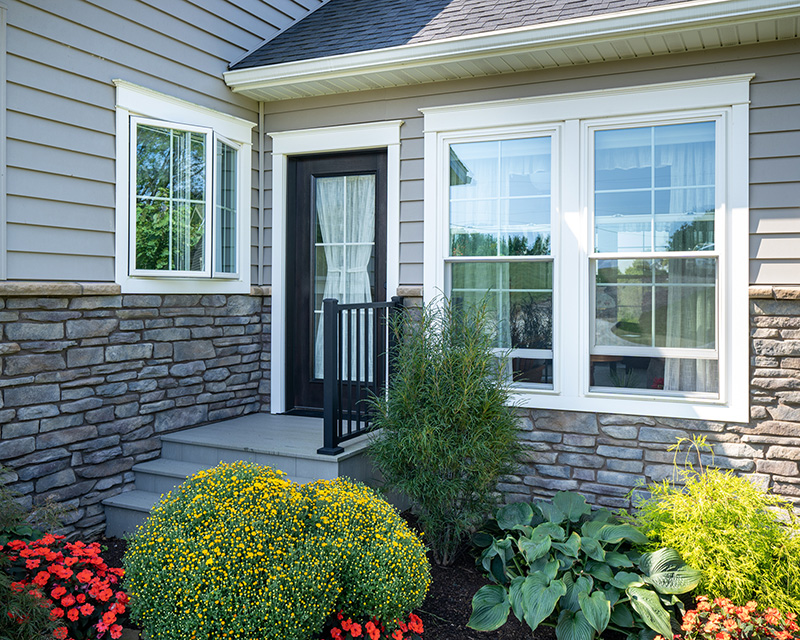
Looking to give your home a facelift?
Are you ready to explore the different vinyl siding colors and replacement window styles to update your homes exterior look?
